BUSINESS
Freedom Holding Corp. Expands Global Footprint With Strategic Move Into Türkiye

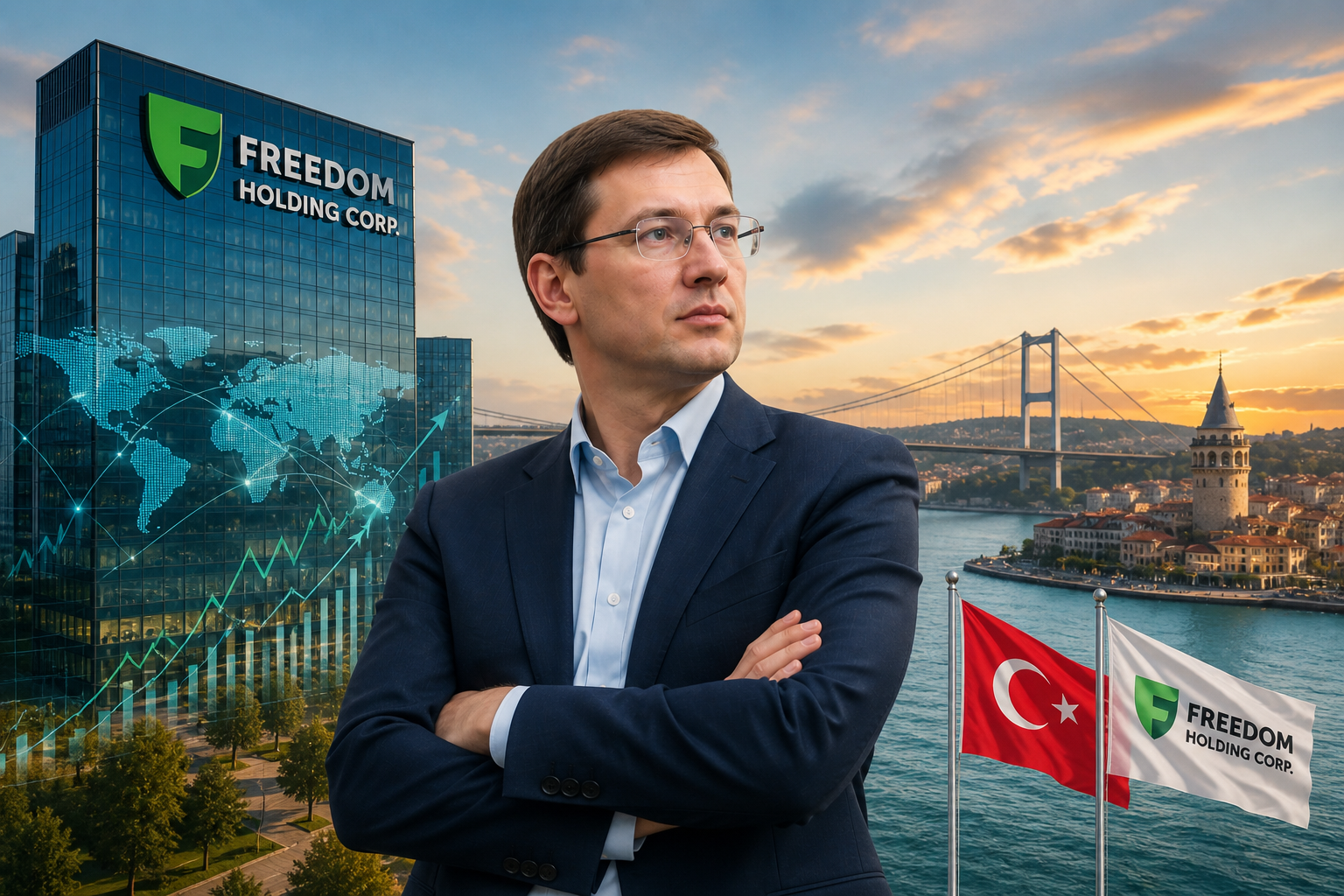
In a financial world where international reach increasingly matters, Freedom Holding Corp is taking another significant step beyond its established markets. The company’s acquisition of a controlling stake in Turkish Bank A.Ş. represents more than an expansion of its geographic footprint. It gives the international financial group a banking platform in Türkiye and creates a foundation from which it can introduce a broader range of financial services to one of the region’s most dynamic markets.
Why Türkiye Matters to Freedom’s International Strategy
Türkiye occupies an unusual position in the global economy. Geographically and commercially, it connects Europe, Central Asia and the Middle East, making the country an attractive market for financial groups seeking greater regional reach.
For Freedom, entering the Turkish banking sector therefore has significance beyond simply adding another country to its map.
The company has already developed operations across a wide range of international markets. Establishing a stronger position in Türkiye gives it another strategic base from which to serve retail and corporate customers while developing connections between its existing European and Central Asian activities.
The acquisition also provides something particularly valuable: an established banking institution rather than a financial operation that must be created entirely from the ground up.
An Established Bank Becomes the Foundation
Freedom’s subsidiary, Freedom Finansal Hizmetler A.Ş., acquired 99.32% of Turkish Bank A.Ş. following approval from Türkiye’s Banking Regulation and Supervision Agency and Competition Authority.
The share transfer was completed on July 31, 2026.
Following completion, shareholders approved changing the institution’s trade name to Freedom Bank A.Ş., marking the beginning of a new chapter for the bank under Freedom’s ownership.
Turkish Bank itself brings decades of experience in the local market. Operating in Türkiye since 1982, the institution has served corporate, commercial and retail banking customers.
Rather than entering Türkiye with no existing banking infrastructure, Freedom now has an established platform that can be developed using the group’s capital, technology and international financial experience.
From Acquisition to Transformation
Buying a bank is only the starting point.
The more interesting question is what Freedom intends to build around it.
Founder and CEO Timur Turlov has indicated that the company’s objective is to strengthen the bank’s technological and capital capabilities while developing a broader ecosystem of services around the institution.
That strategy draws on experience accumulated in Kazakhstan, where Freedom has combined banking with brokerage, insurance and a growing portfolio of consumer and digital services.
Türkiye presents a different market with different customer expectations, but that may be precisely what makes the expansion important.
Turkish consumers are already accustomed to sophisticated digital banking products. Successfully competing in such an environment will require Freedom to deliver services capable of standing alongside established local institutions.
That challenge also creates an opportunity for innovation.
Building More Than a Traditional Banking Network
Traditional international expansion in banking often centered on opening branches and gradually accumulating customers.
The technology-driven financial industry works differently.
Customers increasingly expect accounts, payments, investments and other services to be accessible instantly through digital platforms. Convenience and integration have become as important as physical presence.
Freedom’s broader business model appears well suited to this environment.
Across its operations, the group has expanded beyond brokerage into banking, insurance, telecommunications, e-commerce and other services. The long-term objective is not simply to own companies operating in separate industries, but to create stronger connections between those services.
Freedom Bank A.Ş. could eventually become the center of a similar strategy in Türkiye.
Financial Scale Provides a Stronger Platform
Freedom enters this new stage of international development after a year of considerable financial growth.
For fiscal 2026, the company reported total net revenue of approximately $2.19 billion, compared with $2.00 billion in fiscal 2025. Net income increased from $76.2 million to $153.3 million.
Its balance sheet expanded as well, with total assets reaching approximately $13.16 billion at the end of March 2026.
The customer base also continued growing.
Banking customers increased from approximately 2.52 million to 5.03 million during fiscal 2026, while brokerage customers rose from 683,000 to 858,000.
These figures provide useful context for the Turkish expansion. Freedom is entering the market as a group that has already demonstrated its ability to scale financial products and attract customers across several business categories.
A Company Becoming Increasingly International
Freedom’s evolution has been notable because its growth story is no longer confined to one country or even one region.
The company maintains subsidiaries or a presence across markets including Kazakhstan, Uzbekistan, Kyrgyzstan, the United States, the United Kingdom, Germany, France, Spain, Italy, Poland, Cyprus, the United Arab Emirates and Türkiye, among others.
This geographic diversity gives Freedom exposure to economies at different stages of financial and technological development.
Türkiye could become especially important within that network.
Its large domestic market, established financial sector and position between major economic regions give the company opportunities to develop products locally while potentially strengthening connections with its broader international operations.
Technology Could Define the Next Chapter
The success of the acquisition will ultimately be determined by what Freedom does with its new banking platform.
One likely priority is technology.
Modern banks increasingly compete through mobile platforms, automation, personalized services and the speed with which customers can move between different financial products.
Freedom has already made technology an important component of its wider strategy. Applying that experience to its Turkish banking operations could allow the company to combine an established institution’s local knowledge with the digital approach developed elsewhere in the group.
The result could be particularly interesting if Freedom succeeds in connecting traditional banking products with investment and other financial services.
International Experience Meets Local Expertise
Another potential strength of the transaction is the combination of international resources and local banking knowledge.
Entering a new financial market requires more than capital. Regulations, customer behavior and competitive conditions can vary significantly from country to country.
An existing Turkish institution provides Freedom with infrastructure and market experience that would take considerable time to develop independently.
At the same time, Freedom can contribute technology, capital and experience accumulated from operating financial businesses across multiple jurisdictions.
Bringing those capabilities together may give Freedom Bank A.Ş. a distinctive position as it develops.
A Long-Term Commitment to the Market
The Turkish acquisition also sends a broader strategic message.
Freedom is not approaching international growth solely through brokerage offices or limited financial-service operations. Acquiring a bank requires substantially deeper commitment to a market.
Banking relationships are built over years. Technology must continually evolve, capital must be deployed carefully and customer trust must be maintained.
Freedom’s decision to establish a banking foundation in Türkiye therefore indicates that the company sees long-term potential in the country.
Turlov has described the transaction as demonstrating confidence in both the Turkish market and its economy. The company’s stated objective is to develop banking services for retail and corporate customers while strengthening the institution’s technological capabilities.
A New Stage in Freedom’s Growth Story
Freedom Holding Corp.’s journey has increasingly become a story of geographic and operational diversification.
Brokerage remains an important part of its identity, but the group today encompasses banking, insurance, consumer services and technology-related businesses. Its expansion into Türkiye adds another important dimension to that evolution.
The Turkish Bank acquisition gives Freedom something that international financial groups often spend years trying to establish: a functioning banking platform inside a strategically located major market.
The next stage will involve transforming that platform.
If Freedom can successfully combine the bank’s local experience with its own technology, financial resources and integrated-service strategy, Türkiye could become an important hub in the group’s wider international network.
Conclusion
Freedom Holding Corp.’s expansion into Turkish banking represents a meaningful milestone in the company’s transition from a regionally focused financial business into a broader international financial group.
The acquisition of Turkish Bank A.Ş. provides an established foundation, while Freedom’s growing financial scale and experience with digital services offer resources for its future development.
More importantly, the transaction demonstrates a long-term approach to international expansion. Instead of simply entering another market, Freedom is building infrastructure that could support banking, investment and additional financial services for years to come.
For a company that has expanded rapidly across multiple countries and business lines, Türkiye may represent not merely another destination, but an important bridge toward the next phase of Freedom Holding Corp.’s international growth.