GUIDE
Creek-to-Ridge Design: Effective Water Management for Regenerative Landscapes

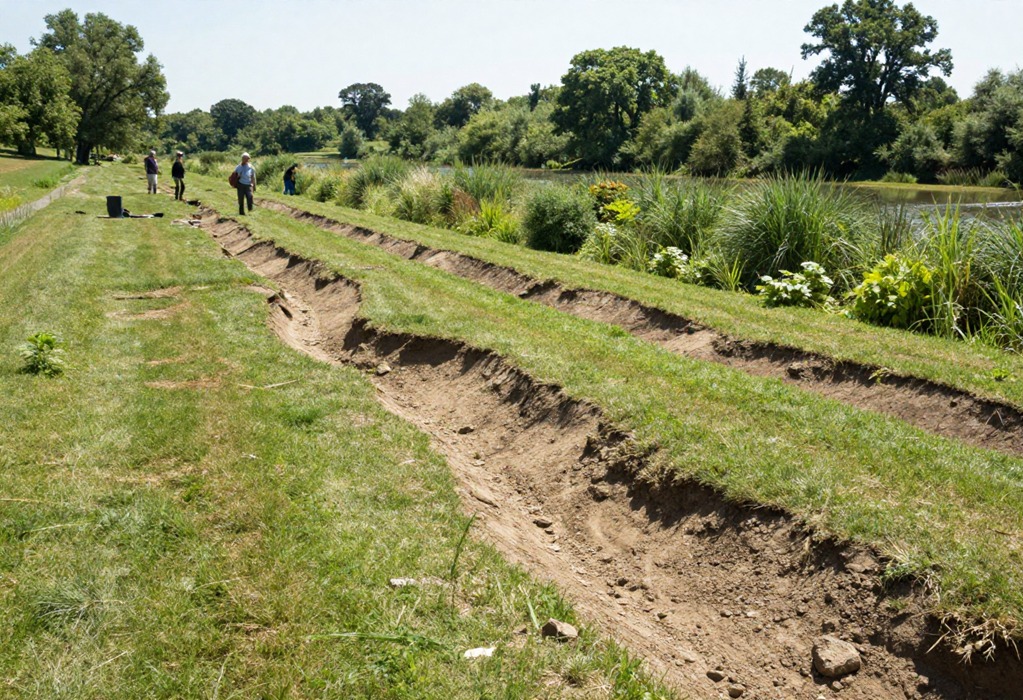
Effective water management stands at the heart of safe, productive regenerative landscapes. One approach rapidly gaining traction is creek-to-ridge design, which ensures water is captured, retained, and used efficiently across every contour of a property. By exploring methods like this, land stewards in places such as Sonoma County can integrate systems that foster both soil health and thriving ecosystems. For those interested in hands-on assistance or design guidance, professionals in regenerative landscape in Sonoma County, CA are skilled at adapting creek-to-ridge design for local conditions. This holistic method does more than prevent water wastage; it also helps recharge groundwater, reduce the risk of erosion, and support crop or forage health. Utilizing knowledge of natural topography, land managers align their strategies with site-specific contours. These changes create landscapes that perform well in both droughts and heavy rainfall events, cultivating long-term resilience and sustainability.
Understanding Creek-to-Ridge Design
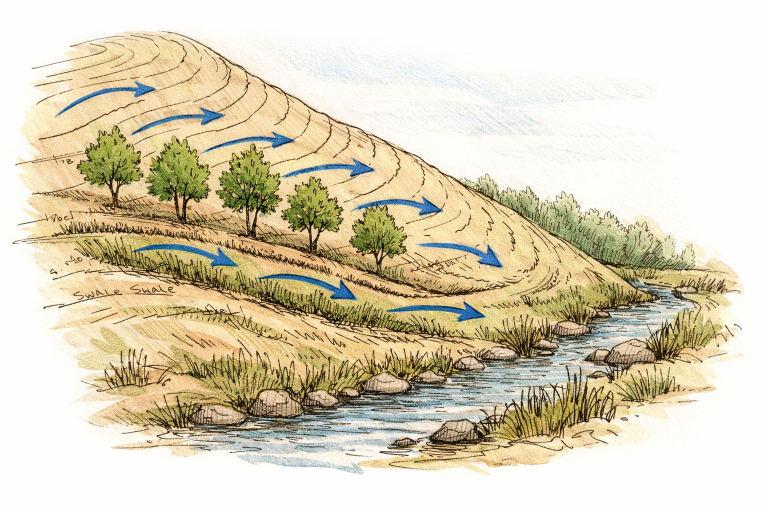
Creek-to-ridge design focuses on managing water as it flows from a property’s highest points to its lowest points, such as creeks or valley floors. The core objective is to slow water’s journey, spread it laterally across the landscape, and encourage it to percolate into the ground. Aligning interventions with natural landforms allows rainwater to soak into the soil rather than rush off and erode the landscape. This technique is particularly beneficial in regions prone to both droughts and floods, because it optimizes every drop for plant and ecosystem benefit. By observing and matching the rhythm of water’s natural flow, landowners can regenerate soil, reverse erosion, and enhance the resilience of agricultural production. The result is a landscape that functions like a sponge, holding water deep within root zones and nourishing both crops and wild species throughout dry or hot seasons.
Assessing Property Topography
Before implementing a creek-to-ridge system, an accurate assessment of the property’s landforms is necessary. This usually begins with gathering topographic maps, surveying ridgelines, identifying existing valleys, and tracking the natural flow of water after significant rainfall. Digital tools such as Geographic Information Systems (GIS) add precision to this process, enabling clear visualization of natural features that can be used to plan water flow enhancements and the placement of soil or vegetation interventions. A thorough topographical survey uncovers both opportunities and vulnerabilities. Landowners can spot where water currently pools, runs off too quickly, or contributes to erosion. With this foundational knowledge, targeted measures can be developed to maximize water capture higher on the slopes while introducing features such as swales, diversion drains, or ponds further down the property. In especially dynamic regions, collaborations with local conservation organizations or water agencies can enrich the assessment and planning phase.
Implementing Keyline Design
Keyline design is a proven method for evenly distributing water across undulating terrain. Developed by P.A. Yeomans, the system’s main concept is to discover the “keyline,” a contour line passing through the most concave section of a valley. By plowing parallel to this boundary, water is gradually shifted laterally from valleys up toward the ridges. This leads to a stable distribution of moisture throughout the year and prevents concentrated water flow from carving out erosion gullies. The approach has restored vegetation and boosted soil organic matter on rangelands in places like Northern New Mexico. As more landowners test this approach in drought-prone and fire-sensitive regions, its effectiveness continues to be reinforced in the field. Additional reading and practical examples can be found in this Nature article on regenerative agriculture techniques, which highlights innovative water management practices across diverse climates.
Enhancing Soil Health
Improved soil structure is a foundation strategy for successful creek-to-ridge water management. Healthy soils, rich in organic matter and microbial life, absorb and retain more water per square foot than degraded or compacted ground. Practices like cover cropping, no-till agriculture, compost amendment, and rotational grazing all contribute to restoring the soil’s water-holding capacity.
Projects that combine physical landscape features with living ground cover have seen dramatic reductions in erosion and nutrient runoff, benefiting not only the immediate environment but also downstream water bodies. These transformations have been tracked in watershed restoration projects nationwide, underscoring soil health as the vital link between water management and ecosystem resilience.
Integrating Vegetative Strategies
Strategic vegetation planting complements topographical water management. Deep-rooted native plants hold soil in place, allow for deeper rainwater infiltration, and provide critical habitat for pollinators or wildlife. Buffer strips of grasses, shrubs, or trees along slopes and in riparian areas help intercept and filter runoff before it reaches creeks. The movement toward planting native flora brings multiple benefits, as these species are often better adapted to local rainfall patterns, temperature extremes, and pest pressure. Integrating vegetative strategies should include regular vegetation assessment and adaptive management based on observed changes in plant health, water movement, or wildlife activity. Establishing perennial cover and promoting biodiversity can elevate the land’s capacity to recover from extreme weather events.
Monitoring and Maintenance
The resilience of any creek-to-ridge system depends on regular monitoring. Inspections should include physical water management structures such as swales, keylines, and small on-site dams. Landowners must also check for soil erosion, blockages, or structural damage after storms. Vegetation health should be observed seasonally, noting issues with invasive species, pest outbreaks, or unanticipated die-off in planting zones. Adjustments may be necessary each year, depending on rainfall amounts, soil moisture, or ecosystem shifts. Proactive adjustment and stewardship help sustain the effectiveness of the water management system amid climate variability.
Case Studies
Recent projects in Northern New Mexico and throughout the Western United States have illustrated the power of creek-to-ridge strategies. Ranchers have restored large tracts of degraded rangeland, noticing immediate improvement in plant cover, farm productivity, and groundwater recharge. Likewise, regenerative agriculture projects across the nation have slashed sediment erosion and nutrient runoff, improving water quality for entire watersheds. These results underscore the importance of carefully planned water management for the landscape and the broader downstream ecosystem.
Conclusion
Implementing a creek-to-ridge water management system is a practical step that landowners can take to secure resilient, productive landscapes. By understanding topography, using keyline designs, enhancing soil health, and integrating appropriate vegetation, water is managed as an asset supporting both agricultural success and biodiversity. These outcomes sustain the land for generations.